The Main Hall is the center of worship at this ancient Tendai-school temple, which was founded in the eighth century. The complex, established by imperial decree, served as a spiritual guardian of both the country and the imperial court. The Main Hall building is an important example of the development of early temple design and is designated a National Treasure.
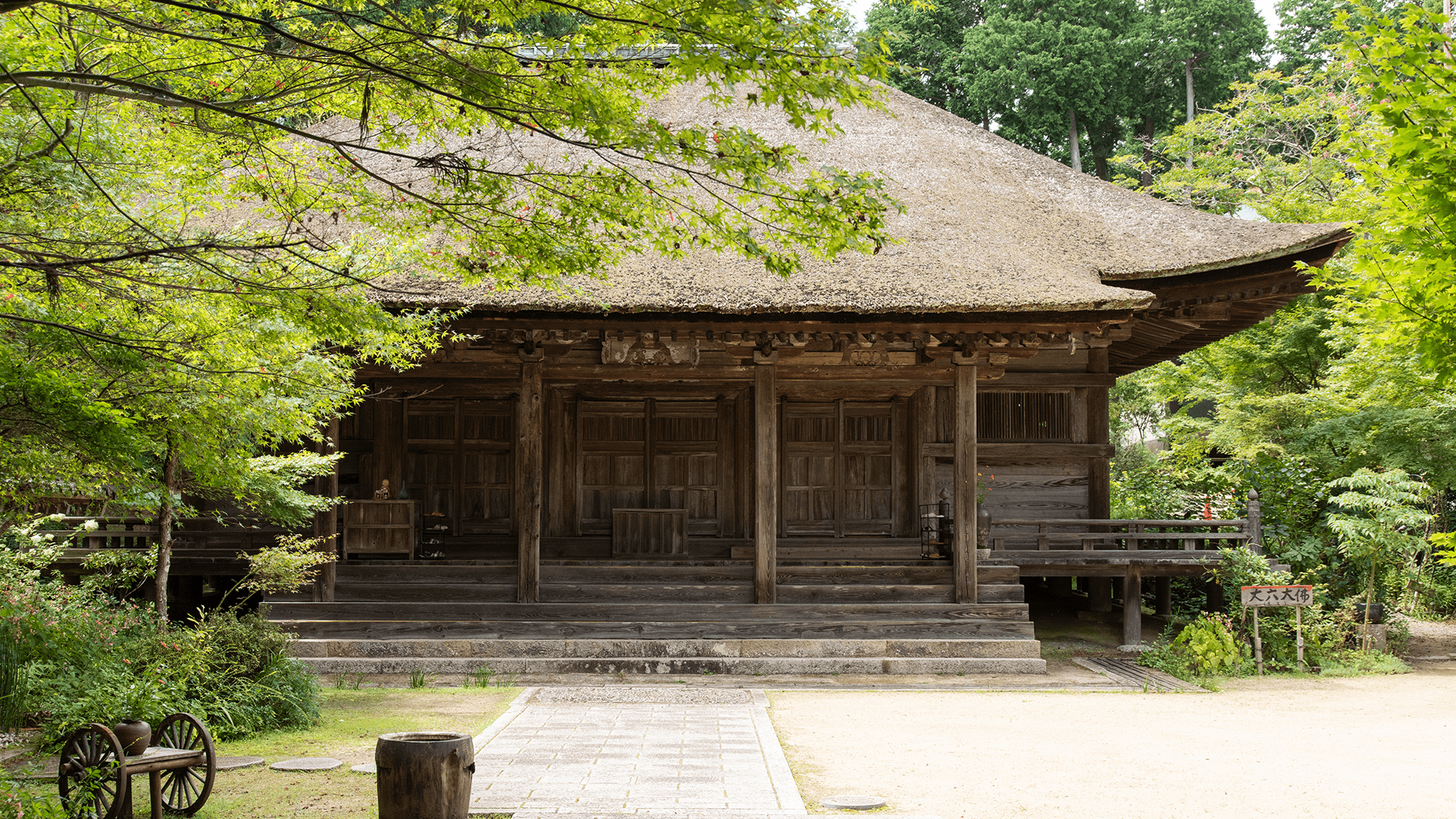
The current Main Hall dates to the early Kamakura period (1192–1333) but integrates the frame of the eighth-century structure. From the exterior, it appears as a single hall, with one large hipped roof covering the entire building. However, the structure inherits an earlier “twin-hall” (narabido) form of temple design. In this format, temples were built with two halls of equal length, one for worshippers and one for the enshrined deity, separated by a narrow gap. This arrangement emphasized the separation of the sacred space of the Buddha from the secular space of the worshipper. The closeness of the halls, however, meant the roofs had narrower spans, which offered limited protection from the rain.
By unifying these twin halls under a single roof, the Chojuji Main Hall marks a crucial transition in temple design. The twelfth-century invention of a hidden roof support structure enabled the construction of a large roof over the two halls. This better protected the walls and foundations from heavy rain, and the larger roof span created a spacious entrance that provided a sheltered gathering area for growing numbers of worshippers. The hall is one of only a few surviving examples of this transitional structure in Japan, making it an invaluable example of early Buddhist architecture.
As the hall is both a National Treasure and an active place of worship, visitors are asked to adhere to the following guidelines:
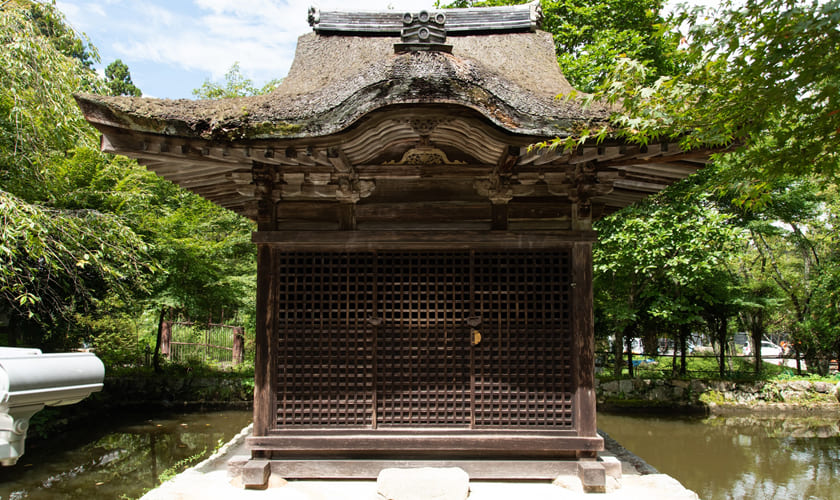
This small hall is dedicated to Benzaiten, the deity of all that flows: water, poetry, music,
wisdom,
and fortune. Believed to date to 1484, the structure is designated an Important Cultural
Property.
The hall is built in the Wayo (Japanese) style of Buddhist architecture which dates back to the
Heian
period (794–1185). The hip-and-gable roof and the use of cypress bark shingles are typical of
the
Wayo
style. However, the hall shows influences from later periods such as a decorative Chinese-inspired
karahafu (rounded, ogee-like) gable adorning the roof.
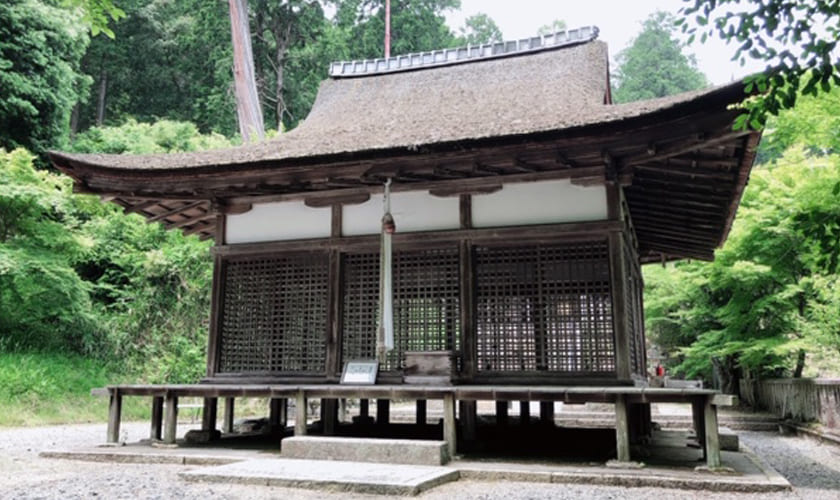
The Worship Hall of Hakusan Shrine is designated an Important Cultural Property and believed to date
from the Muromachi period (1336–1573). The simplicity and lightness of the architecture is typical
of
the earlier Wayo (Japanese) style of the Heian period (794–1185).
The hall is a simple, three-bay square structure, with unadorned boat-shaped brackets and
widely-spaced
rafters visible beneath the eaves. The corners of the main pillars are beveled, adding to the
refinement
of the structure. The lattice doors on all four sides are an unusual element that enhances the sense
of
openness.
Historically, Hakusan Shrine served as the guardian shrine for Chojuji Temple. Although the shrine’s
founding date is unknown, it is first mentioned in a document from 1287. The practice of
establishing
Shinto protector sanctuaries within Buddhist temple complexes became common during the Heian period
(794–1185) as Shinto and Buddhist beliefs became increasingly integrated.
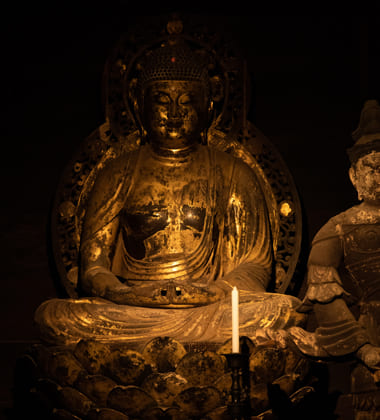
This 142.5-centimeter gilded, wooden statue depicts Amida Buddha, the Buddha of Infinite Light and Life,
seated in the full lotus position with hands joined in the meditation mudra. It is displayed on a lotus
pedestal and backed by double halos symbolizing the Buddha’s eternal radiance and enlightenment. Based
on its style, the figure is believed to date to the late twelfth century. Both the pedestal and halos
are thought to be original, rare for a statue of this age. The statue is designated an Important
Cultural Property.
Stylistically, the carving marks a clear departure from earlier twelfth-century statuary, which favored
soft, subtle features. In this work, the details are bolder, defined by lines carved in deep relief. The
overtly muscular chest and the sharply chiseled folds of the robe, for example, convey a striking
impression of depth and volume. Structurally, the statue was carved from multiple, partially hollowed
pieces of hinoki cypress and assembled using the yosegi-zukuri (joined-wood) technique. This method
mitigates the severe cracking and warping that often occurs in large, solid blocks of wood due to uneven
drying and internal stress.
The Amida statue and a seated statue of the historical Buddha (Shakyamuni) flank the temple’s altar,
where the principal image of Jizo Bodhisattva is concealed behind closed doors. Jizo is revered as the
compassionate protector of children and souls in the afterlife. The Amida figure is positioned on the
left side, with Shakyamuni on the right.
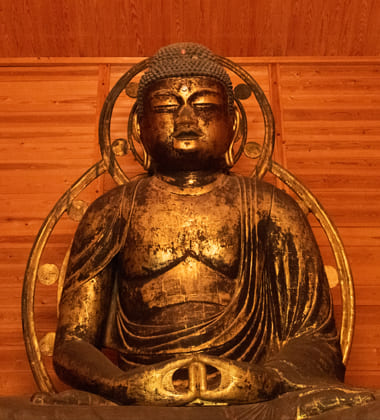
Housed in a repository behind the Main Hall, this 285.5-centimeter statue depicts Amida Buddha, the
Buddha of Infinite Light and Life. The gilded, wooden figure is seated in the full lotus position with
hands resting in the lap, forming the meditation mudra gesture. It is backed by double halos, which
symbolize the Buddha’s eternal radiance and enlightenment. Based on its style, the statue is believed to
date to the Kamakura period (1185–1333). It is designated an Important Cultural Property.
The carving embodies the refined elegance favored by the nobility of the late twelfth century. The
deliberate, restrained features convey meditative serenity and spiritual calm. The rounded face is
marked by a small, delicately sculpted mouth and narrow, barely open eyes set beneath long, arched
eyebrows. The garment exhibits the same subtlety, with its graceful flowing curves.
Structurally, the statue was created using the yosegi-zukuri (joined-wood) technique. This innovative
method emerged in the eleventh century as an alternative to the older ichiboku-zukuri (single-block)
technique. It involved assembling the figure from multiple, hollowed-out pieces of timber. This
technique had several advantages: it mitigated cracking and warping caused by uneven drying in large,
solid wood; enhanced the figure’s structural integrity; and reduced its weight for easier sculpting and
transportation.
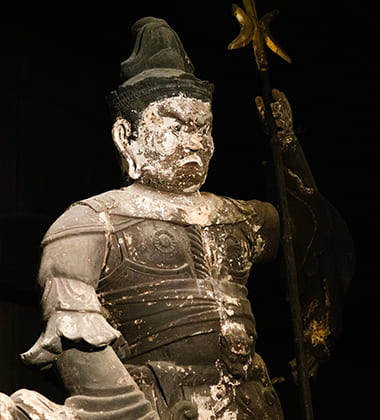
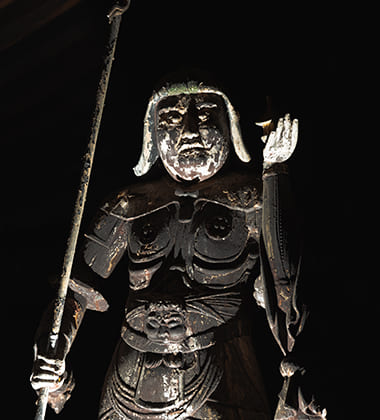
Sculptures of the deities Tamonten and Zochoten flank statues of the Amida and Shakyamuni s on the dais in the temple’s Main Hall. They are two of the Four Heavenly Kings (Shitenno), each of whom watches over one of the four cardinal directions. When displayed in pairs, they are referred to collectively as Niten. The statues are thought to date to the Heian period (794–1185).
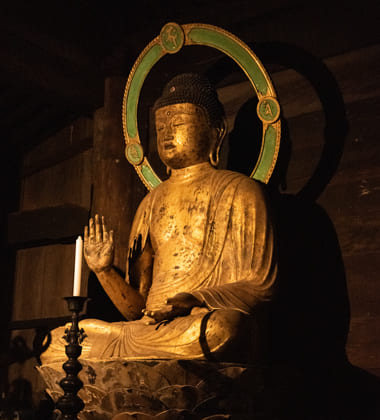
This 180-centimeter, gilded statue depicts the historical Buddha, Shakyamuni, seated in the full lotus
position. The right arm is raised to chest height, palm facing outward, and fingers extended upward, in
the mudra gesture that represents the dispelling of fear. The left hand is held outward, palm facing
forward, with the fingers outstretched and pointing downwards. Known as the wish-granting mudra, it
symbolizes the dispensing of boons. The statue is displayed on a lotus pedestal and backed by a halo
denoting the Buddha’s enlightenment and wisdom. Based on its style, the figure is believed to date to
the twelfth century. The statue is designated an Important Cultural Property.
The figure embodies aristocratic grace, an aesthetic that pervades late Heian-period art. The face
conveys meditative calm through softly rendered features: a gently rounded form, a small mouth, and
narrow, barely open eyes. This delicateness extends throughout the figure’s body and attire. The chest
lacks the muscular definition seen in later Kamakura-period (1185–1333) statuary, and the robes are
thin, with folds in graceful, flowing curves. Every detail, including the small, tight curls of the
hair, reflects the subtle elegance favored by the Heian court.
Structurally, the statue was created using the yosegi-zukuri (joined-wood) technique. This innovative
method emerged in the eleventh century as an alternative to the older ichiboku-zukuri (single-block)
technique. It involved assembling the figure from multiple, hollowed-out pieces of timber. This
technique had several advantages: it mitigated cracking and warping caused by uneven drying in large,
solid wood; enhanced the figure’s structural integrity; and reduced its weight for easier sculpting and
transportation.
The Shakyamuni statue and a seated statue of the Buddha of Infinite Light and Life (Amida) flank the
temple’s altar, which contains the concealed principal image of Jizo Bodhisattva. Jizo is revered as the
compassionate protector of children and souls in the afterlife. The Shakyamuni figure is positioned on
the right side, with Amida on the left.
Chojuji is an ancient temple founded in the eighth century to pray for the imperial family’s well-being and peace in the country. It belongs to the Tendai school of Buddhism and is dedicated to Jizo Bodhisattva, the compassionate protector of children and souls in the afterlife. Several of the structures on the grounds and the Buddhist artworks they contain are designated Important Cultural Properties. The Main Hall and the miniature shrine, which houses the temple’s principal image, are National Treasures.
Founded between 729 and 748, the temple is said to have been commissioned by the ruling emperor to pray for his daughter’s longevity after his prayers for a child were answered. The name Chojuji means “Long Life Temple” and was purportedly bestowed by the emperor. Many people visit the shrine to pray for good fortune in conceiving a child and to wish for their children’s health.
The current Main Hall dates to the early Kamakura period (1185–1333). While appearing from the exterior as a single structure with a continuous hipped roof, the structure actually inherits an earlier “twin-hall” (narabido) form of temple design. In this format, temples were built with two halls of equal length separated by only a narrow gap, one for worshippers and the other for the enshrined Buddhist deity. The Chojuji Main Hall unifies these twin halls under a single roof, marking a crucial transition in temple design. It is one of few surviving examples of this transitional structure in Japan.
Among the temple’s treasures are its sacred Buddhist statues, some of which date to the twelfth century. They depict various deities in seated or standing positions, some holding ritual objects and others making symbolic hand gestures (mudra). In the Main Hall, seated statues of Amida Buddha, the Buddha of Infinite Light and Life, and the historical Buddha flank the temple’s altar, which contains the concealed principal image of Jizo Bodhisattva. Housed in its own repository behind the Main Hall is a 285.5-centimeter seated figure of Amida Buddha thought to date to the Kamakura period.
As Chojuji Temple is both a designated National Treasure and an active place of worship, visitors are asked to adhere to the following guidelines to protect the sanctity of the temple and prevent damage:

 Instagram
 facebook